Friday, February 6, 2009

you want it to be one way


"Exiled Dallas Stars' forward Sean Avery is expected to be cleared from the NHL and NHLPA's Behavioral Modification program later this week or sometime early next."

I was going to write about the ongoing absurdity that is the NHL's unwavering effort to scrub any life - unpredictable, troubling, trangressively hilarious - from it's off-ice theatre, but then this was brought to my attention. I suppose the two stories are somehow linked by what I see as one of the defining themes of modern capitalism: the mechanized deceptions of the market sublimated in the simple language of personal responsibility. It's rare that a 21st century organization would be so honest as to use the phrase "behavioral modification" to describe their means of attracting profits, but that is undoubtedly what is afoot when a BoA representative asked Paul Kelleher of his deceased mother's debts: "You mean you're not going to help her out?"

For a year or so, I was a Bank of America customer. For many years after that, I was their prey. Years later, at a Chicago-area bank, I ran into similar problems while trying to skate by, paycheck-to-paycheck. With overdraft fees piling up due to the bank's convenient policy of re-ordering withdrawals, I called the bank to beg for mercy. After talks with the service rep went nowhere, I was transferred to a manager, who proceeded to lecture me about the importance of keeping tabs on my balance at all times. I protested that these fees were the result of their willful manipulation of my account, which resulted in even more condescending blather from the manager. We're charging you these fees, she seemed to be saying, to teach you a lesson, to show you how to be a better, more responsible person. Every word she said was designed to disguise the simple fact that mistakes like mine are her company's bottom line.

We're conditioned to see institutions like banks as monolithic, neutral arbiters of human activity. Experiences like Kelleher's, surely compounded by the thousands in call centers worldwide, bear out exactly how completely and utterly wrong this is. Banks wield this kind of biopower effortlessly, rigging the unseen details of the game while hectoring us about right and wrong. If it were Bank of America's mother, surely it would pay off the debt. We're led to feel shame about these kinds of defaults, as if they are true faults. Everyone else is watching their balance, paying their debts, why can't you? The irony being that, when Bank of America itself took its eye off the ledger last fall, it felt no shame. Just the opposite, in fact. It marshaled the dire straits of the economy in its favor: as just another way to guilt average Americans into cutting them more checks.

Wednesday, February 4, 2009

how many fingers


"Of course it affects you. But the lessons are really remarkable and important. Part of the problem is..., slowly but surely, you lose your sense of identity. All the perks that you have become addictive. ...You get isolated from yourself, from your family and who you really are. You forget that it’s transitory; that there is a next chapter. You put aside the important things like, why are you here? and what about your family?"

Sounds like a withering testimonial from the latest Partnership For a Drug-Free America ad, right? You know, the one with all the weird animation and bloopy electronic music that looks like it must have been created by someone stoned out of their mind? Wrong. It's former Time Warner head Jerry Levin on CNBC, explaining the culture of entitlement in our nation's gentle CEO class.

The endless bonus windfalls for these executives and the faulty logic of retention now being employed by apologists for the status quo ante; Daschle and Geithner's glib tax avoidance, and the establishment's brushing off of revolving-door bureaucrats as nothing but "valuable assets" to both corporations and government; all of these are little more than a set of anti-social behaviors, behaviors we have long been told were integral to progress.

It's funny then that, over in the pool, or atop whatever pile of money he sits on when not in a pool, Michael Phelps has been compelled to issue public mea culpas for the dire, dire transgression of smoking marijuana. At a party, at an public institution of higher learning, no less. Still early in his days as a national figure, Phelps must not yet be familiar with the American Sportsman's role as the nation's moral stalking horse. Give him time. All he's done is earn his acclaim through hard work, tireless practice and supreme physical conditioning. In our culture's reverse meritocracy, it is he who must apologize for his indiscretions, while our elected and unelected power brokers publicly pursue their addictions unabated.

Wednesday, January 21, 2009

dancing madly backwards


With the unfortunate death of Don Sanderson, the debate is rekindled in some spaces of the hockey media (between those spaces where the debate has never ended) over whether fighting should be banned from the sport. It makes for an uncomfortable spectacle, from this vantage point, in which a sport insecure in the globalized world of sport anxiously questions itself; an uncomfortable and public identity crisis which distracts casual viewers from the beauty of the game with the question of an ugly trifle. The issue presents a peculiar conundrum, where the basic premise that fighting should stay remains unassailable, while most of the arguments in favor of this premise fail.

The idea, for instance, that fighters alone allow the players to police themselves is a flawed one. Hockey is a game unlike any other, in that players are allowed considerable leeway in exacting legal retribution on another player. Other sports institutionalize deviant behavior in minor ways (stealing signs in baseball, the pick and roll in basketball), but hockey players are allotted a wide range of subtle obstructions: sticks to the groin, hands and ankles, facewashes, jabs to the back, sprays of snow, on and on. In a game where the baited often end up penalized, there will always be strategic pests. Having a fighter on hand to punish these types is but one of a number of ways to respond, which belies the truth that most fighters end up fighting other fighters as a kind of proxy, a stand-in for a disagreement between two skill players, or a skill player and a pest.

Another argument holds that banning fighting will lead down a slippery slope in which other perceived dangers are also banned. Zednik had his throat slashed, they crow, so why not ban sharp skates? The difference here is obvious. Hockey games are not periodically interrupted by bouts in which two players swing their feet at eachother's necks. The intent to injure is implicit in any fight, and the extreme, if rare, result of a death is nonetheless a natural one.

The worst argument can be summed up in one word, delivered by Mike Milbury in the 1st intermission of Sunday's Pens-Rangers game on NBC: "pansification". The notion is that hockey players, some of the most inalienably rugged people on earth, will suffer some kind of downgrade in machismo if a few among them are not allowed to punch eachother in the head. Leave aside the regrettably outdated misogyny here (which dripped from every word out of Milbury during the NBC debate, a true embarassment to the game on a nationwide stage). Are we really to believe that hockey - with its tradition of playing through debilitating injury, its playoff schedule which demands nothing short of conditioning perfection, its unspoken code dictating that players take pucks to the face, if necessary, to prevent a goal - is in any danger of losing its status as the world's toughest game?

That leaves us at the doorstep of that hallowed institution, the "culture of hockey." As someone who played a bit in high school, I'm as aware as anyone that fighting attaches itself to the game early; some bastard appendage borne of pent-up after practice frustrations, "boxing" with gloves and helmets on atop a pile of sweaty equipment. We train by fighting our own before we go out and fight the enemy. By the time players have grown up through the ranks of the pros, fighting has become a symbolic event, a show of pride that accomplishes little materially (a practice one finds everywhere, as we watch Israel pummel Gaza with no coherent endgame in mind). Hockey's GMs, mostly grandfathers of the fighting tradition, are unlikely to rule in favor of its removal. I suppose they are right not to attempt some top-down revision of the culture, but its hard to see any other way out.

Tuesday, January 20, 2009

not even for a day


On days like yesterday, few actually find themselves at a loss for words while attempting to relate their impressions of the ineffable, and I suppose I am no exception. Just as Barack Obama's campaign demeanor offered comfort to a broad range of ideologues, so his recent utterances have been subject to interpolations myriad as those of the old Kremlin. What it feels like to me - what is so exhilarating about these days - is the notion that a revolution of practicality is at hand. An era in which dogwhistle rhetoric and the drifting redundancies of slogan are put to rest in favor of plain, informed talk.

Eight years ago, I was a college freshman in Washington, DC, where the awakening of my political awareness more or less corresponded with the recount drama and subsequent Supreme Court junta. I had attended the teach-ins about the sanctions against Iraq, I'd voted for Nader in some statement of impassioned aloofness, but these moments in late 2000 jolted me into a frenzied despair. A band of friends stayed up all night drinking and spraypainting slogans on t-shirts to wear to the inauguration, blinded by our rage from realizing that the next day's forecast promised 30 degree weather and driving rain - not exactly t-shirt weather. Many of us mobbed the route, spitting and chanting; Bush's motorcade mercilessly egged. I vaguely recall arguing with a reporter about the city's intentions to deprive protesters of the proper space to jeer. I had no way of knowing that this was merely the seed of frustration being planted, that the compulsion to reason with this Bush would only become more and more futile. I took to the streets against his policies a few more times after that, but eventually grew exhausted by the cops, the competing passions and calcified anger in everyone around me.

And so, eight years later, I spent this inauguration cloistered in a cubicle, surrounded by colleagues who dont appear to have unhooked their Facebook drips for the occasion, struggling with words for what this all means. Every new era in American politics begins with the perception of a righteous cleansing, a throwing off of the violated language of the previous dominion. I feel the urge to resist this just slightly. I'm concerned, for instance, with the idea of the call to sacrifice, which sounds noble enough, and certainly harmonized with the welcome austerity of yesterday's speech. I am one of the majority of Americans recently polled (and I can't for the life of me find the poll) whose income is only enough to cover rent and basic expenses. We've been sacrificing. It's time for Lockheed and Bank of America to sacrifice.

But I digress. It's an exciting time. For once, I feel like I actually want to sit down and read the newspaper, rather than turning to it with a feeling of dread. If anything, Obama's ascendance brings about the self-immolation of outmoded bigots, long overdue. Michelle Malkin and her kin are welcome to begin bashing their heads against the wall whenever they are ready.

Friday, January 16, 2009

tentatively a convenience


The outgoing president addressed the nation's would-be reality TV viewers last night. I couldn't be bothered to watch. (I did attempt to take in Dick Cheney's final interview on Newshour, which literally put me to sleep; the phrase "since 9/11" has acquired a singular somnolence recently.)

It's a struggle to feel for a metaphor to describe this man's continued affrontery to the intelligence of millions of thinking and caring Americans, but I'd liken it to a serial killer who, in the face of otherwise damning evidence, gets off on a technicality, and then lingers in the courtroom to ponder aloud the unimpeachability of his case. I did happen to overhear a snippet of the speech on the local news which I feel sums up the redundance, the utter zero sum of the past eight years:

You may not agree with some of the tough decisions I have made. But I hope you can agree that I was willing to make the tough decisions.

A bit more longwinded than "l'État, c'est moi", but no less banal.

We recently watched the John Adams miniseries which aired on HBO earlier in the year and which, despite its lengthy, aimless denouement, was pretty engrossing. It was hard to ignore a parallel with the present in the story of Adams' son, Charles, who squandered the career capital of his family name, embarassed himself at Harvard, and died in destitution as an alcoholic. One can't help but wonder if a similar fate wouldn't have befallen our current president had he not availed himself of the cheap redemption of born-again Christianity, not available in the harder times of the late 18th century. Thems the breaks.

WH pressbot Scott Stanzel took care to ensure that no practical jokes would be made on the incoming Obama administration. This, of course, is not the first time a Bush press flack has taken a willfully narrow view of the facts. The profound failure of free market ideology, the gross negligence of FEMA, the slaughter across the Middle East, the indignities of the Patriot Act; these things may not have been practical, but surely they rate somewhere up there with the upper-decker.

Monday, January 12, 2009

justice, what a hassle


"It is a hallmark of a sane and moderate society that when it changes leaders and regimes, those left behind should be abandoned to the judgment of history," writes Harvard's Charles Fried in Saturday's NYT op-ed. "It is in savage societies that the defeat of a ruling faction entails its humiliation, exile and murder."

While it remains to be seen if Erik "
Money Folder" Holder will sentence Donald Rumsfeld to death, it does appear that Mr. Fried is protesting a bit too much. He is not the first to trot out the shibboleth that punishing those responsible for the Bush administration's various humiliations of the law would do little more than establish a pattern of retribution against outgoing administrations. Leave aside the obvious point that an exiting Obama team guilty of such egregious assaults on the law would be prosecuted on day one (rightfully, albeit not without sanctimony or a moment's hesitation from the GOP and media). The easily elided point here is that we would need not fear this pattern, were an independent Justice department in existence and already in pursuit of those at the heart of the policies. Those perpetrators would have been put on trial in late '06, rather than the rotten fruit they bore.

Curiously, Fried goes on to imagine the horror of an American populace needlessly exposed to a concept he terms a "trial." Protracted, he claims this would be. He threatens our senses with something called a "stupefying spectacle". Phony legal scholars, merely existing in the hypothetical at present, would appear on TV to bear false witness. Our otherwise upstanding mass media would be distracted from their diligent work parsing the challenges of universal healthcare by something truly alien and strange: a courtroom drama!

Fried is welcome to whichever logical platitude allows him to consider our society sane. He just so happens to be complicit in the Bush administration's clever construct (at work as well in its pretzelly Gitmo endgame, its Katrina overflights, its de-ownership of the Ownership Society, et...alas...cetera) in which their total abdication of responsibility both enables their disastrous policies and precludes their punitive rejection. Also, about that comparison between Stalin and Rumsfeld? Just a small matter of
punctuation.

Tuesday, January 6, 2009

old acquaintance


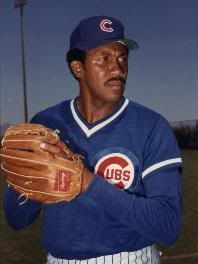
As a rabid and cable-, center ice-less hockey fan, I was certainly thrilled by the Classic, as i would have been thrilled by any televised hockey on New Year’s Day. The spectacle offered enough novelty for NBC to trot out the A production team (novelty to spare, even: what was with that weatherman?), and for McDonough to bring in all the old familiar faces (familiar to most of us, at least. Billy Williams or Fergie Jenkins? Dave Strader sez: "all look same"). I’m naturally glad for any attention to the league and to the game not directly inspired by wanton blows to the head, even if it means dovetailing the game of hockey's centuries-long outdoor tradition with the Cubs' torrid record of occasional division titles.

However, I have to temper my enthusiasm a bit, as I’ve seen now in my 15 years of fandom a series of short-sighted gimmicks come and go that fail to bring any lasting status boost to the game (Glow-pucks, Alexandre Daigle, The Florida Panthers, OT shoot-outs, I'm googling at all of you). Watching Chris Chelios
ride the bench with the Hancock Tower in the background was a thrill, but it pales in comparison to the heights of a Game 7 in the finals, or any Game 7, for that matter. When you strip away all of the pomp, this was just a regular season game. It did offer some beautiful moments (Datsyuk’s flight to the net, Ben Eager’s retro celebration), but it lacked the passion, suspense, sacrifice, and strategy which are all on display in any playoff game. This is not to mention NBC’s glaring omission of any analysis that would have brought these things to the average viewer’s attention.

If it means increased ratings, ticket and merch sales, by all means continue the Winter Classic, but it wont go too far to increase people’s awareness of what makes the game truly great like more, better playoff coverage would. This is not to say though, that more of these games shouldn't be played whenever possible if teams and venues are able to put them together. Surely, venues exist in cold-weather, hockey-rabid cities (ie, not NHL cities) that can offer a more suitable, even ideal viewing experience compared to Wrigley. Indeed, the most compelling note sounding through the latest Classic was that the notion of the carpet-concoursed luxury arena-as-optimal-viewing-experience had been delegitimized just a tad. More outdoor games would be more than just a revenue generator, restoring a legitmacy to the outdoor game as a preternatural part of hockey and beyond that of a serial gimmick.